

Quick answer
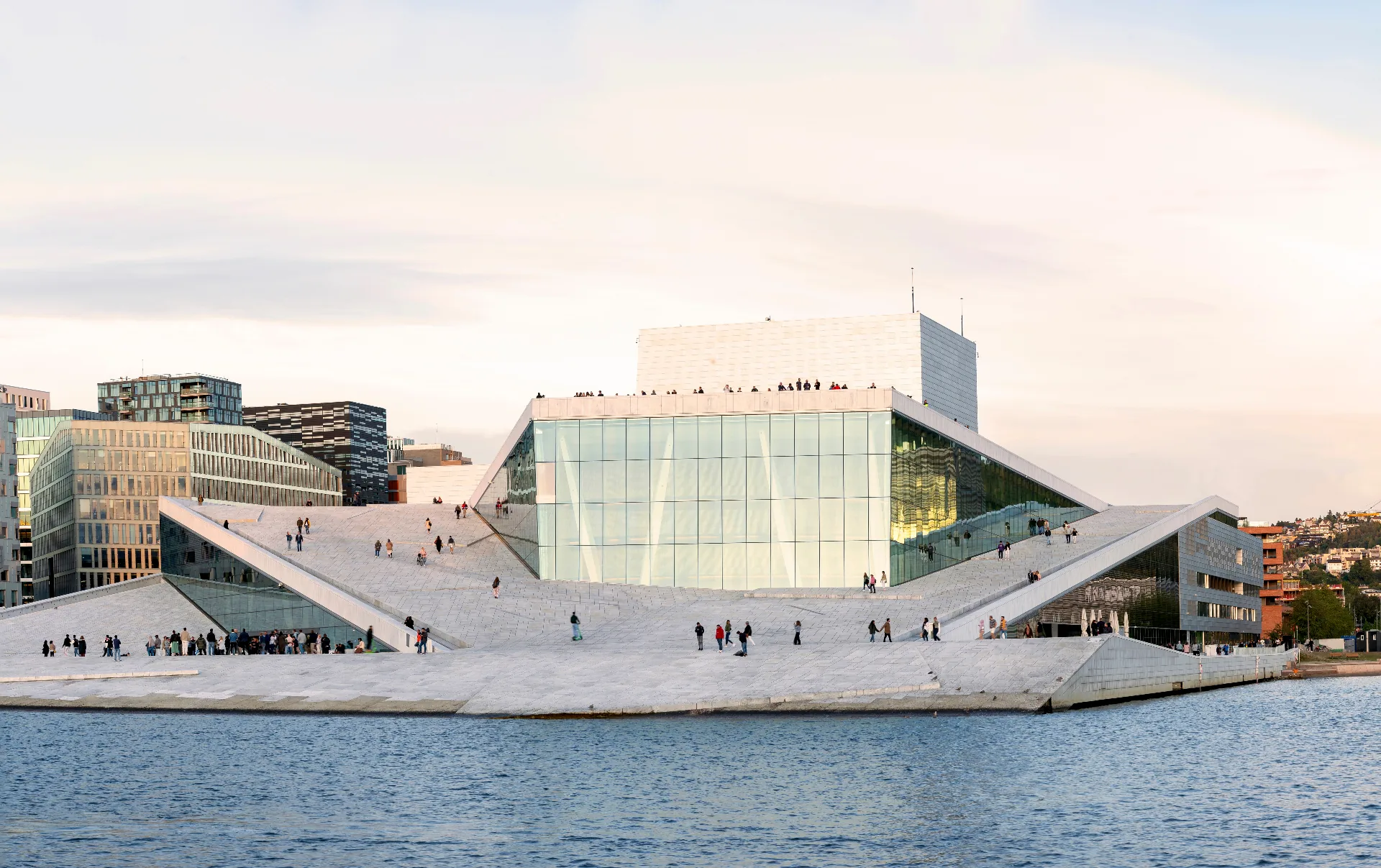
Oslo Opera House photos work best from three vantage points: the walkable roof slopes for angular marble geometry, the harbor promenade for reflections and the full building profile, and the glass foyer for interior light patterns. The building is free to access Monday through Saturday 11:00–16:00 and Sunday 12:00–16:00. Late afternoon between 14:00 and 16:00 delivers warm sidelight on the white Carrara marble, and midweek visits avoid weekend crowds that clutter wide-angle compositions.
The Oslo Opera House occupies sixteen thousand square meters of Carrara marble and Italian granite, all of it designed to be walked on. That accessibility is the structure's defining feature for photographers — the rooftop is not an observation deck, it is the building itself, and your position on those angled planes becomes part of the architectural experience. The sloping surfaces rise twenty meters above sea level at the highest point, offering unobstructed sightlines across Bjørvika and the inner Oslofjord. Snøhetta, the Norwegian architecture firm behind the design, intended the roof as a public plaza, and that civic openness means oslo opera house photos can capture human scale against monumental geometry without barriers or crowd-control ropes. The marble surface changes character with the weather. Morning light renders it cool and blue-white, while afternoon sun between 14:00 and 16:00 pulls warm ochre tones from the stone. Overcast days flatten contrast but eliminate harsh shadows, a useful condition for detail shots of the wood-paneled foyer or the angular junction where roof meets glass facade. Rain brings out the veining in the marble and creates reflections on the horizontal planes, though the surface becomes slippery and the harbor wind intensifies. Winter snow transforms the building into a unified white form, but ice makes the slopes hazardous and daylight hours shrink to a narrow afternoon window. The glass foyer inside Kirsten Flagstads Plass 1 is as photographable as the exterior, with oak-clad walls ascending three stories and floor-to-ceiling windows framing the harbor. The foyer is free to enter during public hours, and the interior light at midday creates strong diagonal patterns across the wood surfaces. For Oslo opera house photos that emphasize context, the eastern harbor promenade near the Barcode Project towers provides a wide-angle view of the building against the cityscape, while the southern waterfront at Sørenga captures the opera house with sailboats and the Akershus Fortress peninsula in the background. The structure photographs well from nearly every angle, but the rooftop itself remains the essential vantage point — the place where architecture becomes topography and photography Oslo's waterfront icon means standing on it.
“The rooftop is not an observation deck, it is the building itself, and your position on those angled planes becomes part of the architectural experience.”
Top Oslo Opera House Photos: Best Angles and Viewpoints
The Roof Slope
Capture the sharp geometric lines of the white Italian marble against the Oslofjord water. Access via the public pedestrian ramp.;Daytime with clear sky
The Harbor Reflection
Position yourself on the harbor promenade to frame the building's reflection in the water. Best during calm, low-wind conditions.;Morning or golden hour
Kirsten Flagstads Plass
Shoot from the ground level to capture the contrast between the tilted roof and the modern cityscape. Includes the iconic glass facade.;Mid-day light
The Foyer Window
Photograph the interior foyer's wooden lattice walls and expansive glass panes looking toward the fjord. Accessed through the main entrance.;During public opening hours
Visual Highlights for Your Oslo Opera House Photos
The Oslo Opera House features distinct architectural zones that define its visual identity. These highlights focus on the interplay of stone, glass, and timber throughout the building.
The Marble Roof
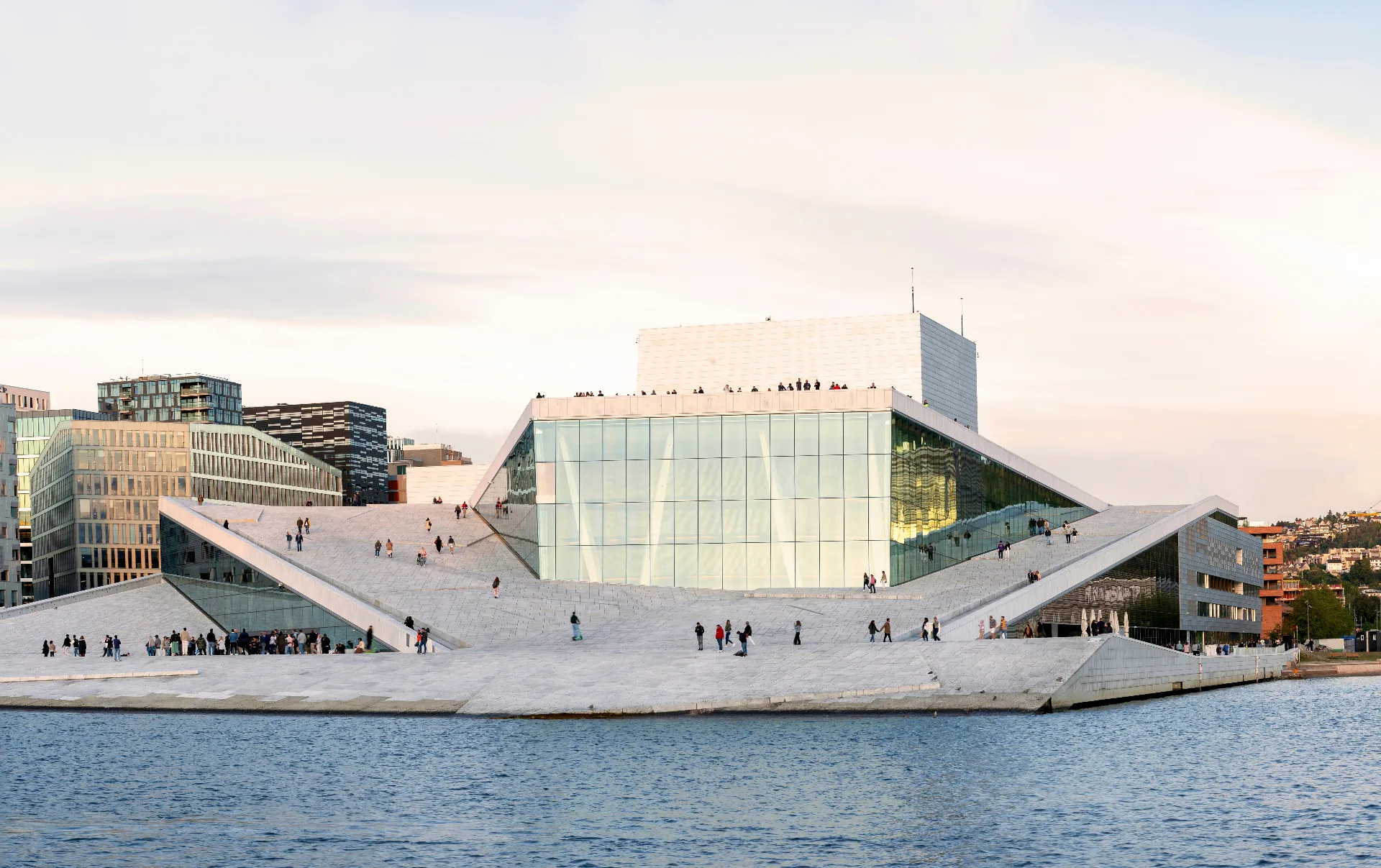
The building is surfaced with Italian Carrara marble, creating an angular landscape that slopes directly into the fjord. It offers expansive perspectives of the harbor and cityscape.
Walk to the highest point to capture the roof geometry against water.
The Glass Facade
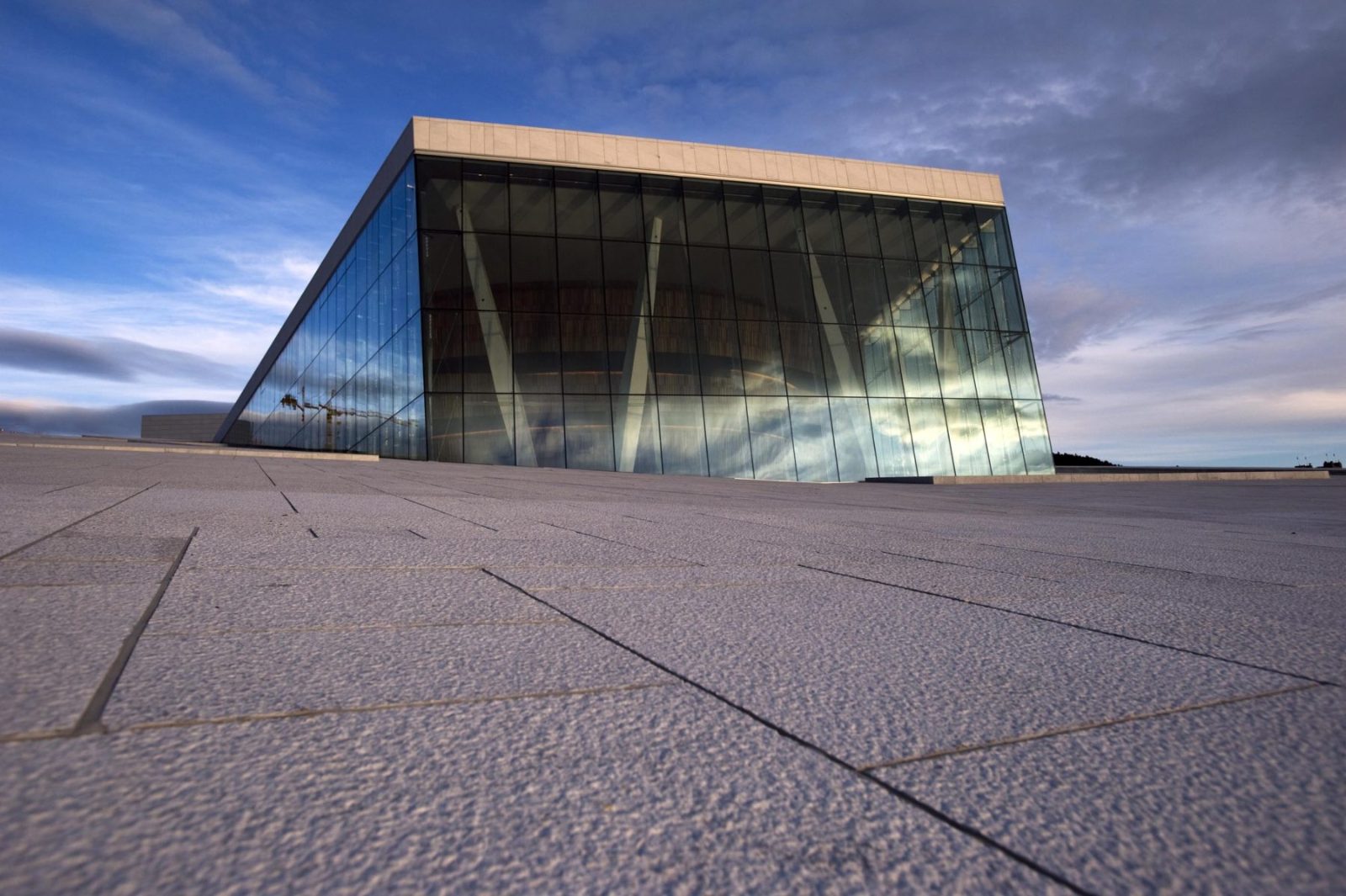
The tall, angular glass walls provide a contrast to the solid stone roof and allow natural light into the lobby. These windows serve as a transparent boundary between the interior and the Oslofjord.
Photograph from the ground level to capture reflections of the sky.
The Main Stage Lobby
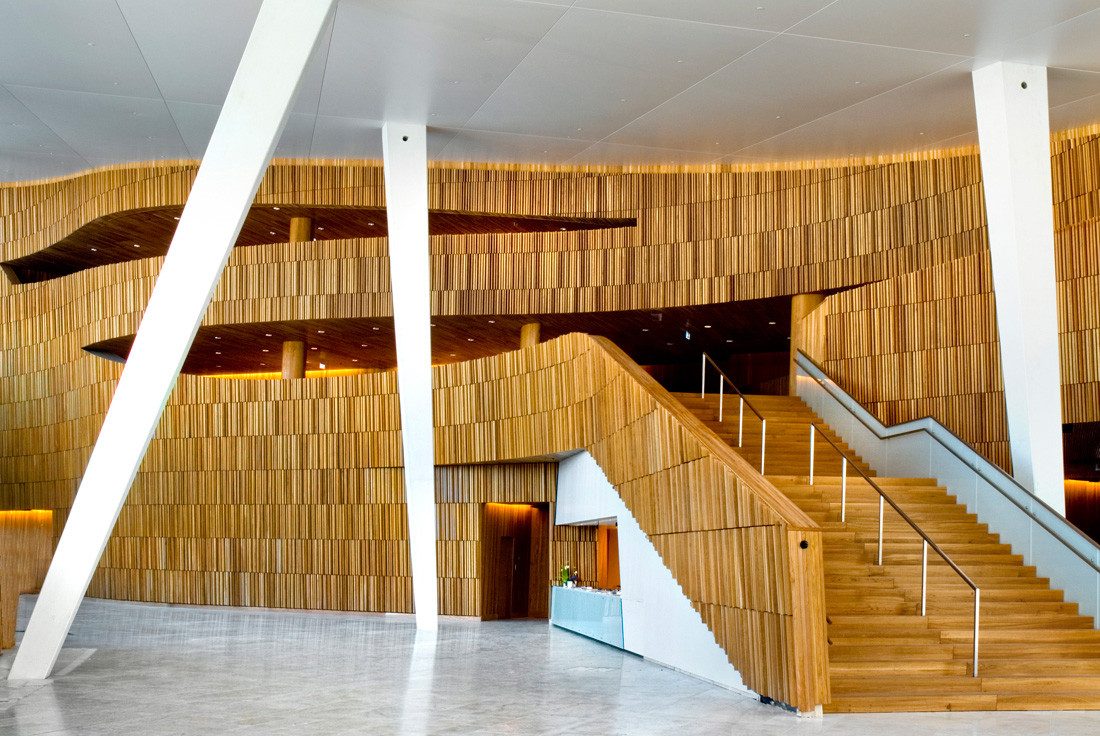
The interior is dominated by a wave-like wall of golden oak timber, which contrasts with the exterior white surfaces. This space is designed to lead the eye toward the stage area.
Use a wide-angle lens to capture the curve of the wood.
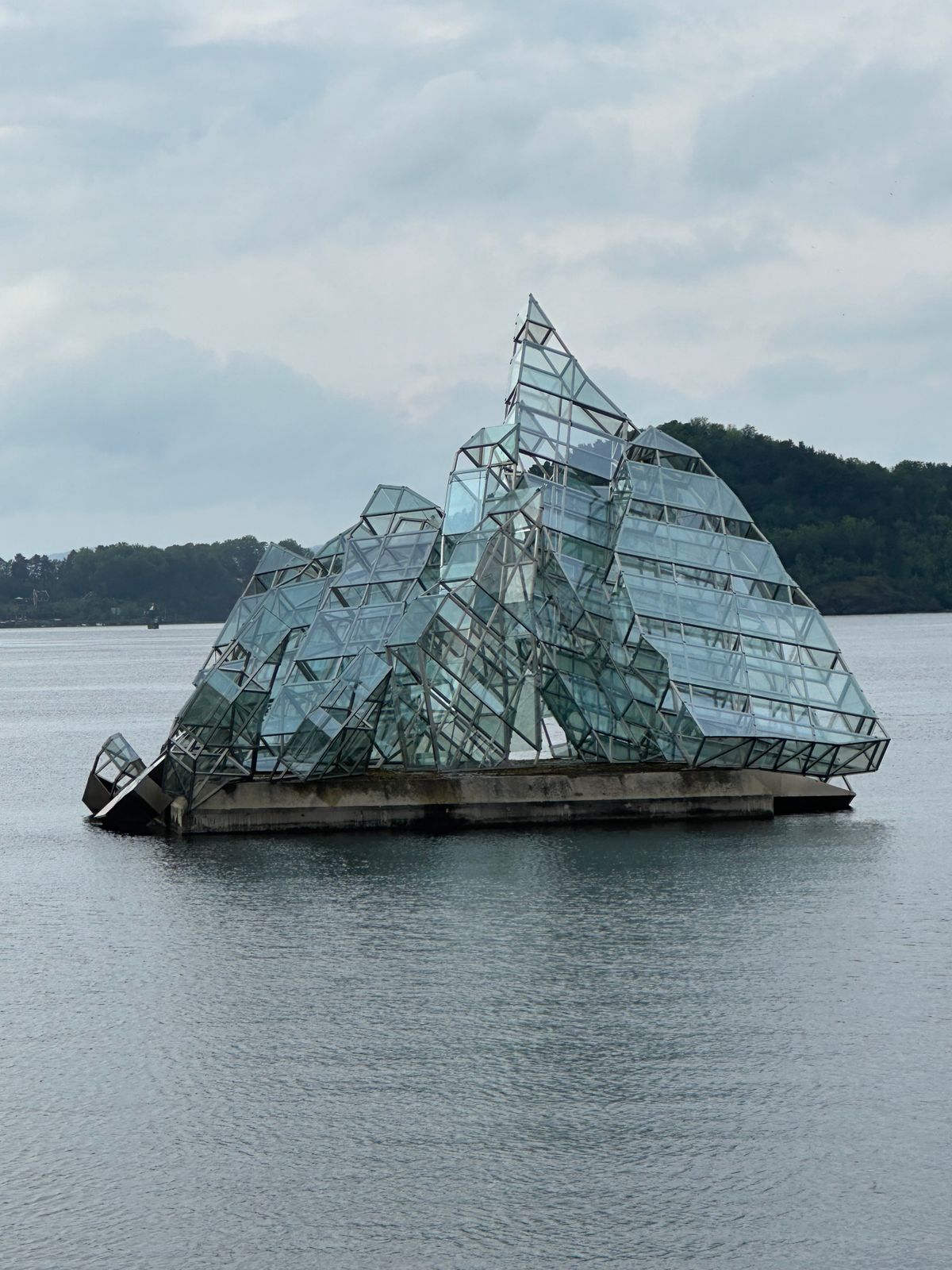
She Lies Sculpture
This permanent art installation by Monica Bonvicini floats on a steel and glass structure in the water near the opera house. It mimics a drifting iceberg and changes appearance with the tides.
Frame the sculpture against the opera house for depth and scale.
Best Time to Capture Oslo Opera House Photos
To capture the Oslo Opera House with optimal lighting and manageable crowds, plan your visit during the shoulder seasons or early weekday hours. These windows balance long daylight conditions with lower foot traffic on the marble roof.
Weekday mornings
Minimal—
Arriving at 11:00 provides the clearest paths for architecture photography before afternoon visitors arrive.
May and September
ModerateMild temps of 10°C to 18°C
Long daylight hours allow for extended sessions on the roof without the extreme cold of winter.
November to February
LowCold, 0°C to -5°C
Low sun angles create dramatic shadows across the marble surfaces, though outdoor sessions are brief.
Verdict: For the best balance of light and accessibility, visit on a Tuesday, Wednesday, or Thursday morning during the months of May or September.
Public Hours for Oslo Opera House Photos
The Oslo Opera House foyer is open to the public daily for visitors interested in architecture and photography. Access is consistent throughout the week with slightly adjusted hours on Sundays.
| Monday | 11:00–16:00 | |
|---|---|---|
| Tuesday | 11:00–16:00 | |
| Wednesday | 11:00–16:00 | |
| Thursday | 11:00–16:00 | |
| Friday | 11:00–16:00 | |
| Saturday | 11:00–16:00 | |
| Sunday | 12:00–16:00 |
Entry Fees for Oslo Opera House Photos
Access to the exterior roof and public foyer of the Oslo Opera House is free of charge for photography. Fees only apply when choosing to participate in guided tours or attending scheduled performances.
A typical visitor pays 0 NOK for exterior and foyer access, with costs only incurred for tours or performances.
Getting There for Your Oslo Opera House Photos
The Oslo Opera House is located at Kirsten Flagstads Plass 1, situated prominently along the Oslo Fjord waterfront. It is easily accessible via public transit, with the Oslo Central Station (Oslo S) serving as the primary hub for visitors arriving by train, metro, or bus.
All local and regional lines to Oslo Central Station
Lines 1–5 to Jernbanetorget station
Lines 30, 31, 32, or 81 to Bjørvika
Walking from the city center via Operagata
Check availability
Frequently Asked Questions About Oslo Opera House Photos
Everything you need to know about oslo opera house photos